
Core Safety Group

Case Study: SWPPP Compliance Documentation Integrity

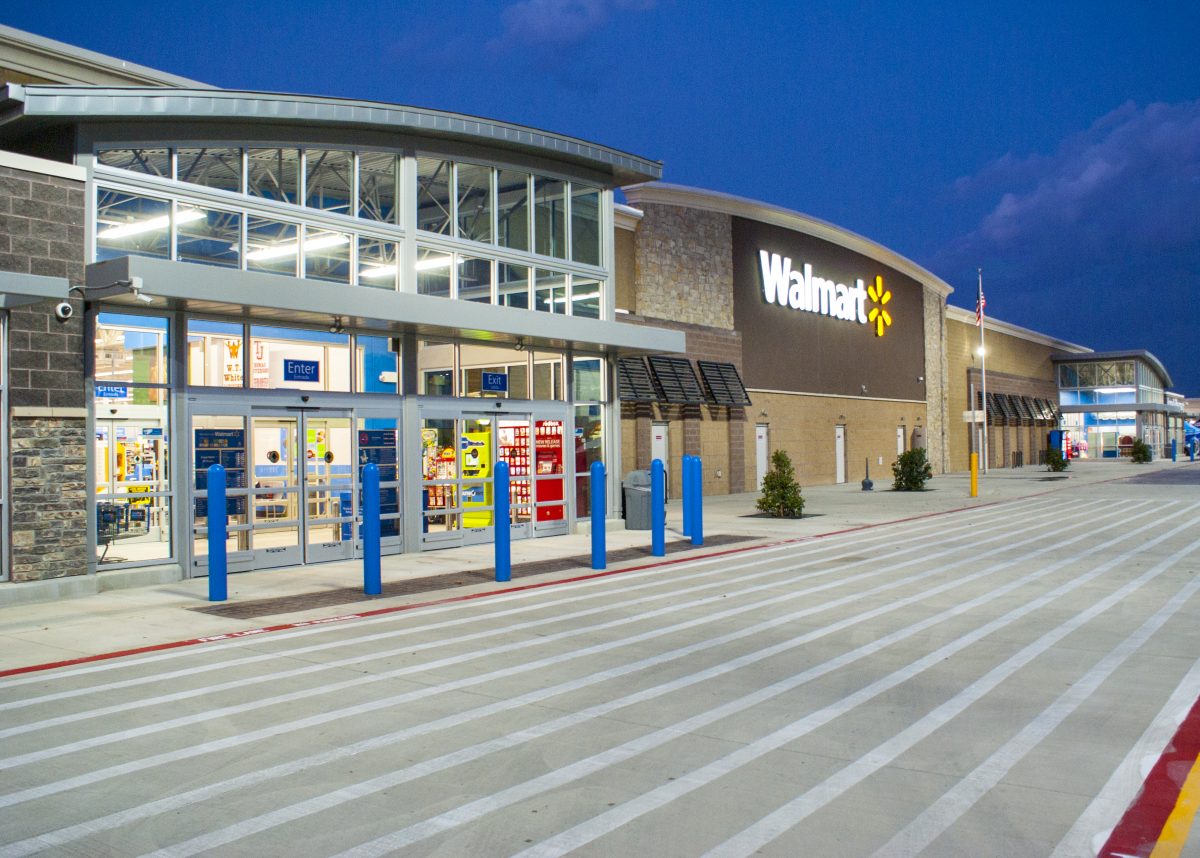
Wal-Mart Stores, Inc. partnered with a general contractor to build a store in Washington, IN. Under the contract, representatives were required to perform daily SWPPP inspections of the job site and complete inspection reports, and once every two weeks, a compliance officer was to perform an inspection and complete a report.

Wal-Mart Stores, Inc., partnered with a general contractor to build a store in Washington, Ind. Under the contract, representatives were required to perform daily stormwater pollution prevention program (SWPPP) inspections of the job site and complete inspection reports, and once every two weeks, a compliance officer was to perform an inspection and complete a report.

On September 12, 2005, the contractor’s project manager, performing the role of compliance officer, signed a daily inspection report without having actually visited the job site on that date.

Wal-Mart was already operating under two consent decrees with the EPA related to stormwater violations. When the company discovered that the daily inspection submission was “false or misleading,” they terminated the contract and filed suit against the contractor.

The Court ruled in favor of Wal-Mart. It was determined that the contractor breached the agreement, and as a result, Wal-Mart was awarded damages in excess of $3 million.

THE LESSONS:

  • The lack of integrity in the inspection documentation prompted Wal-Mart to terminate the contract rather than issuing a penalty. Wal-Mart’s strict stance on SWPPP compliance is a result of previous consent decrees. The company has zero tolerance for failure to fulfill contract obligations related to SWPPP implementation.
  • The contractor failed to operate in accordance with the compliance environment that Wal-Mart desired, they did not fully embrace the specific needs of their client.
  • When working with a client whose SWPPP requirements are more stringent than those imposed by the governing agency, the client’s requirements become the compliance standard, from a contract performance standpoint.
  • A single act by one person can jeopardize the contract status of a very large project as well as the compliance status.
  • Falsifying compliance inspection reports can result in agency enforcement action against the company and the individual. You can be held personally responsible for knowingly violating legal requirements.


For counsel on compliance documentation, contact us.

Ladder 101: Back to the Basics

Sometimes, the most dangerous errors can be traced back to basic safety protocol. The American Ladder Institute has declared March “National Ladder Safety Month,” and CORE Safety Group is dedicated to ensuring that our team holds and shares the most ­up-to-date and relevant tactics for effective safety training.

Sometimes, the most dangerous errors can be traced back to basic safety protocol.

The American Ladder Institute has declared March “National Ladder Safety Month,” and CORE Safety Group is dedicated to ensuring that our team holds and shares the most ­up-to-date and relevant tactics for effective safety training.

Below are key points to remember when using a ladder:

1. Choose the right fit. When choosing a ladder, you should know two things: your total weight and the project’s height.

To figure out the total amount of weight your ladder will need to support, add the following weights: You + your clothing and protective equipment + tools and supplies you are carrying or storing on ladder

This weight calculation will tell you what Duty Rating your ladder will need, Type IAA, IA, I, II or III. The Duty Rating is found on the specification label on the side of your ladder.

Once your know your project’s height, a sticker on the side of the ladder will indicate the highest standing level, which will tell you whether you need a larger or smaller ladder. When an extension ladder is in use, it should extend 3 feet above the working surface. Remember, there is no relationship between ladder length and weight capacity.

2. Use the “three-point” rule when working with extension ladders.

While you are working on, ascending, or descending the ladder, always face the ladder, and have either two hands and one foot or two feet and one hand in contact with the ladder to minimize the likelihood of a fall.

3. 4:1 Ratio

A straight ladder should be placed against the wall so that the base of the ladder is one foot away from the wall for every four feet of height. So a 16 foot extension ladder should be 4 feet out from the wall at the base.

4. Ensure safe ladder use with “ISSUE”

  • Inspect the ladder before using.
  • Stabilize the ladder on firm, level ground.
  • Stay off the ladder during inclement weather.
  • Use slip-resistant shoes and follow the three-point rule.
  • Educate yourself with reading materials before using new equipment.

To learn more about ladder safety training, or other trainings that CORE offers, call 888.250.1830 or visit us at coresafety.com

EPA Finalizes 2017 Construction General Permit

The U.S. EPA published its final 2017 Construction General Permit (CGP), which takes effect on February 16, 2017, the same date as the expiration of the 2012 CGP. The 2017 permit includes several new or modified requirements, summarized below, which will impact affected construction projects located in portions of the U.S. where EPA is the permitting authority. These changes may also be reflected in state-level permit programs as they come up for renewal.

The U.S. EPA published its final 2017 Construction General Permit (CGP), which takes effect on February 16, 2017, the same date as the expiration of the 2012 CGP. The 2017 permit includes several new or modified requirements, summarized below, which will impact affected construction projects located in portions of the U.S. where EPA is the permitting authority. These changes may also be reflected in state-level permit programs as they come up for renewal.

1. NOI & NOT Submittals: Site operators are now required to electronically prepare and submit NOIs and NOTs to start and stop permit coverage. Some states (GA, NE, OR and RI) have announced that they will require the use of EPA’s eReporting Tool when they reissue their construction stormwater permits. Other states are expected to follow suit. EPA also added 3 questions to the NOI form that will aid in the determination of new requirements.
 
2. Authorized Discharges: The 2017 CGP contains an explicit prohibition of non-stormwater discharges of external building washdown waters containing hazardous substances such as paint or caulk containing PCBs.
 
3. Notice of Permit Coverage: An additional requirement has been added to the existing Notice of Permit Coverage that must be posted at a safe, publicly accessible location in close proximity to the construction site. This notice must also include information informing the public of how to contact the EPA to obtain a copy of the SWPPP or if stormwater pollution is observed in the discharge.
 
4. Stockpiles & Land Clearing Debris Piles: EPA changed the requirement for temporary stabilization for stockpiles or land clearing debris piles from “where practicable” to requiring cover or appropriate temporary stabilization for all inactive piles that will be unused for 14 or more days.
 
5. Construction and Domestic Waste: EPA now requires operators to keep waste container lids closed when not in use and at the end of the business day for containers that are actively used throughout the day, and to provide effective cover for waste containers without lids.
 
6. Stabilization Deadlines: EPA modified the approach to stabilization deadlines based on the concept of phasing construction disturbances. Deadlines are based on total amount of land disturbance occurring at any one time.
  • Five acres or less – Immediately stabilize any area of exposed soil where construction activities have permanently ceased or will be temporarily inactive for 14 or more calendar days. Complete installation of stabilization measures as soon aspracticable, but no later than 14 days after initiated.
  • More than 5 acres – Follow the same initiation schedule. However, complete installation of stabilization measures as soon as practicable, but no later than 7 calendar days after initiation.

IMPACTS of these CHANGES:

1. Is my project located in an area where EPA is the permitting authority?
 

The following states and territories fall under EPA authority:

  • Idaho, Massachusetts, New Hampshire, New Mexico, and the District of Columbia;
  • Indian country lands within Alabama, Alaska, Arizona, California, Colorado, Connecticut, Florida, Idaho, Iowa, Kansas, Louisiana, Massachusetts, Michigan, Minnesota, Mississippi, Montana, Nebraska, Nevada, New Mexico, New York, North Carolina, North Dakota, Oklahoma, Oregon, Rhode Island, South Dakota, Texas, Utah, Virginia, Washington, Wisconsin, and Wyoming;
  • Areas within Colorado, Delaware, Vermont, and Washington are subject to construction by a federal operator
 
2. What does it mean if my project is not located in one of these areas?

States in which EPA has delegated authority to manage their own NPDES permitting programs must ensure their programs are at least as stringent as the federal program. Like EPA, states reissue their CGPs periodically, but not necessarily on the same schedule. Therefore, it is important to recognize that states will likely update their requirements in subsequent CGP revisions to reflect the new standards issued in EPA’s 2017 CGP.

3. What do I need to do as a result of the CGP updates?
  • Most importantly, review and understand the SWPPP developed for your project. The purpose of the SWPPP is to assure the federal, state, or local CGP requirements are properly addressed and fit the unique conditions of each project.
  • Pay attention to SWPPP conditions that dictate frequencies for taking specific actions, such as stabilization, inspections, waste container management, etc.
 
4. How can CORE Safety help project teams manage changes to EPA’s CGP?
  • CORE can assist companies with stormwater manual revisions to bring company compliance procedures into alignment with the revised CGP.

Fire Prevention Checklist

Take a look at our checklist to help promote fire prevention at your job.

  • Check your fire extinguishers monthly and document your inspections.
  • Schedule a yearly inspection with a fire protection company.
  • Conduct live fire extinguisher training- (We would be happy to help with this!)
  • Make sure to keep fire extinguishers:
    • Within 50 feet, when storing 5 or more gallons of flammable/combustible liquid or solids.
    • Between 25 and 75 feet away from above ground storage units.
    • At every landing on multi-story building stairwells.
    • One for every 3,000 square feet of indoor building space. (You should not travel more than 100 feet to reach an extinguisher)
  • Have EXITS clearly marked and free of debris, trash, or materials.
  • Run a mock fire incident to make sure your policies are known to employees.

Let's better your safety program

Call: 888-250-1830 Email: info@coresafety.com Request a Quote