Core Safety Group

When OSHA Shows Up: What Construction Companies Should Know

For construction companies, an OSHA inspection can happen with little warning. An inspection may be triggered by a serious injury or fatality, an employee complaint, a referral, or one of OSHA’s programmed enforcement initiatives. In fiscal year 2025, federal OSHA conducted more than 30,000 inspections, including both programmed and unprogrammed inspections.

When an OSHA compliance officer arrives at a jobsite, preparation matters. Companies that understand the inspection process, know their responsibilities, and have established procedures for responding can navigate the process more effectively.

An OSHA inspection should not be treated as simply a search for violations. It is an opportunity for OSHA to evaluate workplace conditions, safety practices, employee knowledge, and the employer’s overall approach to managing hazards.

Understanding Why OSHA May Be at Your Jobsite

Not every OSHA inspection begins the same way.

OSHA conducts both programmed and unprogrammed inspections. Programmed inspections focus on industries, workplaces, or hazards that OSHA has identified for increased enforcement attention. Unprogrammed inspections can result from employee complaints, referrals, injuries, fatalities, or other circumstances.

Understanding the reason for an inspection can help an employer understand its potential scope. However, an inspection that begins with a specific concern can expand if the compliance officer identifies additional hazards or receives information indicating that other areas of the workplace may require attention.

This is particularly important on construction sites, where conditions can change quickly and multiple employers may be working in the same area.

What Happens When an OSHA Inspector Arrives?

An OSHA inspection generally begins with the compliance officer presenting credentials and identifying the purpose of the inspection. An opening conference may follow, during which OSHA explains the general scope of the inspection and discusses the rights of the employer and employees.

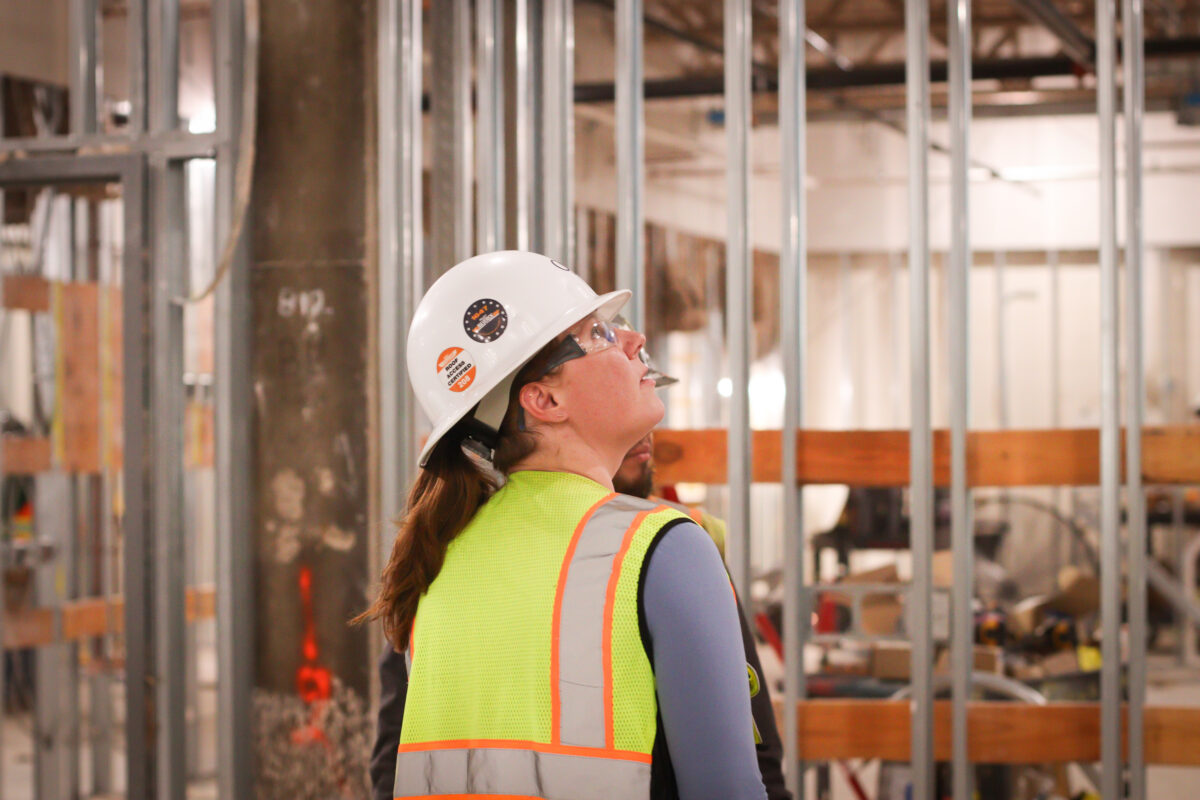
From there, the inspection may include a physical walkaround, review of records and documentation, photographs, measurements, and employee interviews. OSHA compliance officers may also conduct private employee interviews as part of the inspection process.

For employers, this means the inspection is about more than what is immediately visible on the jobsite.

A company may have a written safety program and required training records, but OSHA can also look at whether those policies are actually being implemented in the field.

What OSHA May Look At Beyond the Obvious Hazard

A common misconception is that an OSHA inspection is simply about finding a visible violation.

In reality, compliance officers may evaluate a much broader picture of workplace safety. That can include:

  • Physical conditions and hazards at the worksite

  • Safety policies and procedures

  • Employee training and knowledge

  • OSHA injury and illness records

  • Hazard assessments

  • Personal protective equipment

  • Safety documentation

  • Employer and employee communication

  • How safety procedures are implemented in the field

Employee interviews can be particularly important because they can provide OSHA with information about how work is actually being performed, not just what a written policy says should happen. OSHA’s inspection procedures specifically recognize employee interviews as a way to evaluate workplace conditions, work practices, and the implementation of safety and health programs.

This is one reason having a safety program on paper is not enough. The program needs to reflect what is happening on the jobsite.

An OSHA inspection can be stressful, but employers should approach the process professionally and thoughtfully.

Employees and management should understand who is responsible for communicating with the compliance officer, how the inspection will be coordinated, and where relevant documentation can be found. At the same time, employees should never be coached to provide particular answers or discouraged from exercising their rights.

OSHA’s inspection procedures provide opportunities for employer and employee representatives to participate in the physical inspection, while OSHA may also conduct private employee interviews.

Having established procedures before an inspection occurs can help prevent confusion and ensure that everyone understands their role.

The Inspection Doesn't End When OSHA Leaves

The end of the walkaround does not necessarily mean the end of the process.

OSHA generally conducts a closing conference at the conclusion of an inspection. The compliance officer may discuss apparent violations, potential corrective measures, and other findings with the employer.

If citations are issued, employers must understand what the citations mean, what deadlines apply, and what options may be available.

This is also an important point for companies to evaluate their own safety practices. An inspection can reveal gaps that extend beyond the specific conditions OSHA identified. Addressing those underlying issues can help prevent similar problems from occurring elsewhere on the project or at other company locations.

Preparing Before OSHA Arrives

The best time to prepare for an OSHA inspection is before one happens.

Construction companies should regularly evaluate their jobsites, review safety documentation, train employees on their responsibilities, and make sure written procedures accurately reflect actual work practices.

OSHA’s preliminary FY2026 Top 10 most frequently cited standards continues to include construction hazards such as fall protection, scaffolding, ladders, and fall-protection training. These recurring citations provide valuable insight into the hazards OSHA continues to encounter during inspections.

The goal should not simply be to make a jobsite look compliant when an inspector arrives. It should be to build safety practices that are consistently followed whether OSHA is present or not.

How CORE Safety Group Can Help

Preparing for an OSHA inspection can be challenging, especially for contractors managing multiple jobsites, crews, and safety requirements. Having experienced safety professionals available can help organizations identify potential gaps and address them before they become larger concerns.

CORE Safety Group works with contractors to provide practical safety support tailored to their operations. Our team can help with:

  • Safety Consulting to evaluate safety practices, identify potential gaps, and provide ongoing guidance
  • Safety Staffing to provide dedicated safety professionals for projects that require onsite support
  • Safety Program Assessments to evaluate existing safety programs and identify areas for improvement
  • Mock OSHA Inspections to help companies understand what an OSHA inspection may look like and identify potential concerns before an actual inspection
  • Safety Training to ensure employees and supervisors understand the safety requirements associated with their work
  • OSHA Training including OSHA 10-Hour and OSHA 30-Hour courses for construction professionals
  • Written Safety Programs to develop and maintain procedures that align with a contractor’s operations
  • Jobsite Safety Inspections to identify hazards and evaluate conditions before they attract OSHA’s attention
  • OSHA Citation & Claims Defense to help organizations navigate the process after receiving an OSHA citation
  • Safe Assist for contractors looking for ongoing outsourced safety management and support

CORE can also help organizations determine which combination of services best fits their needs, whether they are preparing for an OSHA inspection, strengthening an existing safety program, or looking for ongoing support across their jobsites.

Preparedness Is Part of Safety

An OSHA inspection can be an intimidating experience, but companies do not have to wait for an inspector to identify gaps in their safety program.

Understanding the inspection process, knowing what OSHA may evaluate, and regularly assessing how safety practices are implemented in the field can help construction companies take a more proactive approach to compliance.

The goal is not simply to avoid a citation. It is to create a safety program that works every day, protects employees, and stands up to scrutiny when it matters most.


If your organization needs help preparing for an OSHA inspection or evaluating its current safety practices, CORE Safety Group can help. Contact our team to learn more about Mock OSHA Inspections, OSHA Citation & Claims Defense, and our other safety consulting services.

This information is provided for general informational purposes and is not intended to constitute legal advice or replace site-specific safety guidance
    Let's better your safety program

    Request a Quote


    For online training courses please visit our online training page


    Near-Miss Reporting in Construction: Turning Close Calls Into Safer Jobsites

    Construction jobsites are constantly changing. New equipment arrives, crews move between work areas, subcontractors begin different phases of work, and conditions can change from one day to the next. With so many moving parts, incidents can happen even when safety procedures are in place.

    But not every hazardous situation results in an injury or property damage.

    Sometimes a worker narrowly avoids being struck by equipment. A tool falls from an elevated platform but no one is underneath it. An employee notices an unsafe condition just before an incident occurs. These situations are often referred to as near misses, and they can provide valuable insight into potential hazards before someone gets hurt.

    A strong near-miss reporting process gives employers an opportunity to identify these warning signs, understand why they occurred, and make changes before a similar situation leads to an incident.

    What is a Near Miss?

    A near miss is an unplanned event or unsafe condition that could have resulted in an injury, illness, property damage, or other loss but did not.

    For example, consider a worker walking through a construction area when a piece of material falls from an elevated platform and lands nearby. No one is injured, but the event reveals a potential falling-object hazard.

    Other examples might include:

    • A worker nearly being struck by moving equipment
    • A vehicle backing into an area where workers are present
    • An unsecured tool falling from an elevated work area
    • A worker slipping on a wet surface but catching themselves
    • A piece of equipment malfunctioning without causing an injury
    • Materials shifting or falling during handling
    • An employee discovering an unguarded piece of equipment before using it
    • A worker entering an area that was not properly barricaded

    While the outcome may appear positive because no one was injured, the underlying hazard still exists.

    That makes the near miss an opportunity to learn.

    Why Near-Miss Reporting Matters

    Injury and incident reports tell employers what happened when something went wrong. Near-miss reports can provide insight into what almost went wrong.

    When employees consistently report near misses, employers can begin identifying patterns that may otherwise go unnoticed.

    For example, several near misses involving workers and mobile equipment could indicate that pedestrian and equipment routes need to be reevaluated. Multiple reports involving falling materials could point to problems with storage, housekeeping, or overhead work controls.

    Instead of waiting for an injury to reveal a weakness in the safety program, employers can use near-miss information to identify potential problems earlier.

    The goal isn’t to eliminate every unexpected event. The goal is to learn from these events and use that information to reduce the likelihood and severity of future incidents.

    Creating a Culture Where Employees Report Near Misses

    Having a near-miss reporting form is only one part of an effective reporting program.

    Employees need to feel comfortable reporting hazards and close calls without worrying that they will automatically be blamed or punished.

    If workers believe reporting a near miss will result in disciplinary action, they may be less likely to speak up. That can prevent management from learning about hazards that could eventually contribute to an injury.

    A strong reporting culture encourages employees to communicate when something doesn’t look right, even when no one was hurt.

    Supervisors can help establish that culture by:

    • Taking reports seriously
    • Thanking employees for bringing hazards forward
    • Responding to reports promptly
    • Focusing on identifying contributing factors
    • Communicating what actions were taken
    • Avoiding unnecessary blame
    • Sharing lessons learned with the workforce

    Employees are more likely to continue reporting when they can see that their concerns lead to meaningful action.

    A complicated reporting process can discourage employees from using it.

    Near-miss reporting should be straightforward enough that a worker or supervisor can quickly document what happened and provide the information needed for follow-up.

    A basic report may include:

    • Date and location
    • Description of what happened
    • Work activity being performed
    • Potential consequences
    • Equipment or materials involved
    • Immediate actions taken
    • Contributing factors
    • Recommended corrective actions

    Photos can also be useful when appropriate. A photo of the work area or condition involved can help safety personnel better understand what occurred.

    The purpose of the report is not to create unnecessary paperwork. It is to capture useful information that can help prevent future incidents.

    Look Beyond the Immediate Cause

    When reviewing a near miss, it can be tempting to focus on the individual action that occurred immediately before the event.

    For example, if a worker nearly trips over a piece of material, the obvious response might be to remind the worker to watch where they are walking.

    But a stronger investigation asks additional questions.

    Why was the material there?

    Was there inadequate housekeeping? Was the material temporarily stored in that location? Was there a designated storage area? Were employees aware of the expected housekeeping procedures? Was the work area congested because of the current phase of construction?

    Looking beyond the immediate action can help employers identify underlying conditions that may contribute to repeated problems.

    The goal is to correct the hazard, not simply remind employees to be more careful.

    Use Near-Miss Data to Identify Trends

    One near miss may appear to be an isolated event. Multiple similar near misses can reveal a trend.

    Construction companies can review reports over time to identify recurring issues involving:

    • Specific jobsites
    • Certain types of equipment
    • Particular work activities
    • Specific phases of construction
    • Certain shifts or times of day
    • Housekeeping
    • Personal protective equipment
    • Employee training
    • Communication between crews
    • Subcontractor activities

    For example, if multiple reports involve employees nearly being struck by equipment, that could indicate a broader issue with traffic control or pedestrian routes.

    If several reports involve workers slipping in the same area, the company may need to address drainage, housekeeping, walking surfaces, or another underlying condition.

    Tracking this information allows safety teams to move from reacting to individual events toward identifying patterns and addressing recurring hazards.

    Turn Reports Into Corrective Actions

    Collecting near-miss reports is only useful if the information leads to action.

    Once a report is submitted, employers should determine what changes may be necessary to reduce the likelihood of the situation happening again.

    Depending on the circumstances, corrective actions could include:

    • Changing a work procedure
    • Repairing or replacing equipment
    • Improving housekeeping
    • Adding barricades or signage
    • Changing traffic patterns
    • Providing additional training
    • Modifying material storage
    • Increasing supervision
    • Updating a written safety procedure
    • Conducting additional inspections

    Corrective actions should also be followed up to make sure they were actually implemented and are addressing the identified hazard.

    A report that simply gets filed away does not improve jobsite safety.

    Share Lessons Learned With the Workforce

    Near misses can also become valuable training opportunities.

    When appropriate, employers can share anonymized examples during toolbox talks, safety meetings, or training sessions.

    For example, a supervisor might explain that a worker recently encountered an unsecured extension cord across a walkway. Rather than simply correcting that individual situation, the supervisor can use it as an opportunity to remind the entire crew about housekeeping expectations and proper cord management.

    Sharing lessons learned can help employees recognize similar hazards in their own work areas.

    It also reinforces the idea that reporting a near miss contributes to the safety of the entire team.

    Near-Miss Reporting Should Complement Jobsite Inspections

    Near-miss reporting should not replace regular safety inspections.

    Inspections provide an opportunity for safety professionals and supervisors to proactively identify hazards, while near-miss reports provide insight into situations employees have actually encountered during their work.

    Together, these approaches can provide a more complete picture of jobsite conditions.

    For example, an inspection may identify that a pedestrian route is poorly defined. A near-miss report may then reveal that an employee was nearly struck by equipment while crossing that same area.

    The two pieces of information can reinforce each other and help identify where additional controls may be needed.

    How CORE Safety Group Can Help

    Developing an effective safety program involves more than responding after an incident occurs. Companies need processes that help identify hazards, evaluate risks, and continuously improve safety practices.

    CORE Safety Group can help organizations develop and strengthen their approach to construction safety.

    Our team can provide support through services including:

    Whether an organization needs help establishing a reporting process, evaluating existing safety practices, or providing ongoing safety oversight, CORE can help develop an approach based on the organization’s operations and needs.

    Use Near Misses as an Opportunity to Prevent Incidents

    A near miss may seem like a situation where everything worked out because nobody was injured.

    But it can also be a warning.

    Every close call provides an opportunity to ask what happened, why it happened, and what can be changed to prevent a similar situation in the future.

    When employees are encouraged to report near misses, supervisors respond appropriately, and organizations turn reports into meaningful corrective actions, those close calls can become valuable tools for improving safety.

    The goal is not simply to have fewer incident reports. It is to create a safety culture where employees feel comfortable identifying hazards, organizations learn from what happens on the jobsite, and corrective actions are taken before a near miss becomes an injury.


    If your organization needs additional support managing construction safety, CORE Safety Group can help.

    Contact CORE Safety Group to discuss your safety management needs and learn how Safe Assist® can provide ongoing safety support for your organization.

    This article is provided for general informational purposes and is not legal advice. Employers should consult qualified safety professionals and legal counsel regarding their specific circumstances.

      Let's better your safety program

      Request a Quote


      For online training courses please visit our online training page


      5 OSHA Recordkeeping Mistakes That Trigger Audits

      Accurate OSHA recordkeeping is one of the most overlooked areas of workplace safety compliance. Companies often assume that as long as no major incidents occur, their records are in good shape. But recordkeeping errors are one of the most common reasons OSHA opens an inspection, and they can lead to citations even when your actual safety performance is strong.

      Requirements vary by company size and industry, and some smaller or lower-hazard employers are partially exempt. For most covered businesses, though, these are five of the most common recordkeeping mistakes that put companies at risk, and what to do instead.

      1. Misclassifying Recordable Incidents

      Not every workplace injury needs to go on the OSHA 300 Log, but many that should are left off. A common mistake is treating an incident as “first aid only” when it actually meets OSHA’s criteria for a recordable case, such as restricted work, job transfer, or days away from work. The line between first aid and medical treatment can be narrower than it seems. Getting this classification wrong, in either direction, is one of the fastest ways to draw scrutiny during an inspection, and it is rarely a one-time mistake. If a company misunderstands the criteria once, it usually applies that same flawed logic across every similar incident that follows.

      2. Missing or Late Deadlines for the 300A Summary

      Companies covered by OSHA’s recordkeeping rule are generally required to post their OSHA 300A Summary in a visible location from February 1 to April 30. That is a separate deadline from electronic submission. Establishments that meet certain size or industry thresholds also need to submit their data through OSHA’s Injury Tracking Application, typically by early March. Missing either deadline, even by a few days, is a common and avoidable violation, and it often happens when a company assumes posting alone covers both requirements. Building a recordkeeping calendar as part of a broader OSHA compliance audit is one of the simplest ways to make sure both deadlines are met every year.

      3. Inconsistent or Incomplete Incident Documentation

      OSHA expects incident records to be detailed and consistent across all three required forms: the 300 Log, the 300A Summary, and the 301 Incident Report. When descriptions of the same event vary from one form to another, or key details like body part affected or days away from work are left blank, it raises red flags for auditors and can suggest the records were not properly maintained. This is one of the more common OSHA recordkeeping requirements companies underestimate, since the forms often get filled out by different people at different times. Without a consistent review process, small discrepancies build up unnoticed until an inspection puts all three documents side by side.

      4. Failing to Retain Records for the Required Period

      OSHA requires injury and illness records to be kept for five years following the calendar year they cover. Some companies purge old records too early, whether due to a system migration, an office move, or simple oversight. If OSHA requests historical records during an inspection and they cannot be produced, that gap becomes part of the finding, regardless of how clean the rest of the file looks. A digital, centrally stored recordkeeping system, reviewed on a regular schedule, is usually enough to prevent this entirely.

      5. Not Training the People Responsible for Recordkeeping

      Recordkeeping often falls to whoever has bandwidth, not necessarily the person best equipped to interpret OSHA’s classification rules correctly. Without proper workplace safety training, well-intentioned staff can make consistent errors across dozens of records without realizing it. A single untrained recordkeeper can create a pattern of mistakes that looks far worse during an audit than any one incident would on its own. Investing in proper training up front is almost always less costly than correcting a year’s worth of flawed records after the fact.

      How CORE Safety Group Can Help

      Recordkeeping mistakes rarely come from carelessness. They come from unclear processes, unclear ownership, and a lack of dedicated safety expertise on staff. That is exactly the gap CORE Safety Group’s safety consulting services are built to close.

      Our team conducts thorough recordkeeping audits to catch classification errors and documentation gaps before OSHA does. We help assign clear ownership over your 300 Log, 300A Summary, and 301 Incident Reports, so nothing falls through the cracks between departments. We also provide hands-on workplace safety training for the people responsible for your records, so classification decisions are made correctly and consistently, not based on guesswork.

      Beyond recordkeeping, our outsourced safety consulting services help companies build OSHA compliance programs that hold up under real scrutiny, not just paperwork that looks good on the surface. Whether you need a one-time compliance audit ahead of an anticipated inspection or ongoing safety management support, CORE Safety Group’s team of experienced safety consultants can build a plan around your business’s size and risk profile.

      If your company is due for an OSHA inspection, or simply wants the peace of mind that comes with knowing your records can withstand one, CORE Safety Group’s Safety Consulting team can help you get there. 


      *This article is intended as general guidance and does not cover every OSHA recordkeeping requirement or exemption that may apply to your business. For a full assessment of your specific obligations, talk with our Safety Consulting team or refer directly to OSHA’s recordkeeping regulations.*

      Behind The Hard Hat – Episode 2

      See Safe Assist® in Action — Real Safety Management Support, On the Job

      Ever wonder what a dedicated safety professional actually does on-site? In this episode of Behind the Hard Hat, we take you behind the scenes with a CORE safety manager during a live grocery inspection and fall protection stand down for two of our Safe Assist® clients Texas.

      With CORE’s Safe Assist® Program, you get a degreed, credentialed safety professional assigned to assist your organization — conducting site safety audits, OSHA compliance inspections, safety training, accident investigations, and more. Whether you’re in construction, manufacturing, roofing, or general industry, our safety professionals work as an extension of your team — when and where you need support.

      Not ready to hire a full-time safety director? Safe Assist® gives you expert-level safety support without the overhead. From jobsite inspections to OSHA defense, we handle it so you don’t have to.

      Behind The Hard Hat – Episode 1

      See Safe Assist® in Action — Real Safety Management Support, On the Job

      Ever wonder what a dedicated safety professional actually does on-site? Behind the Hard Hat takes you behind the scenes with a CORE safety manager during a live roofing inspection for one of our Safe Assist® clients in Mansfield, TX.

      With CORE’s Safe Assist® Program, you get a degreed, credentialed safety professional assigned to assist your organization — conducting site safety audits, OSHA compliance inspections, safety training, accident investigations, and more. Whether you’re in construction, manufacturing, roofing, or general industry, our safety professionals work as an extension of your team — when and where you need support.

      Not ready to hire a full-time safety director? Safe Assist® gives you expert-level safety support without the overhead. From jobsite inspections to OSHA defense, we handle it so you don’t have to.