
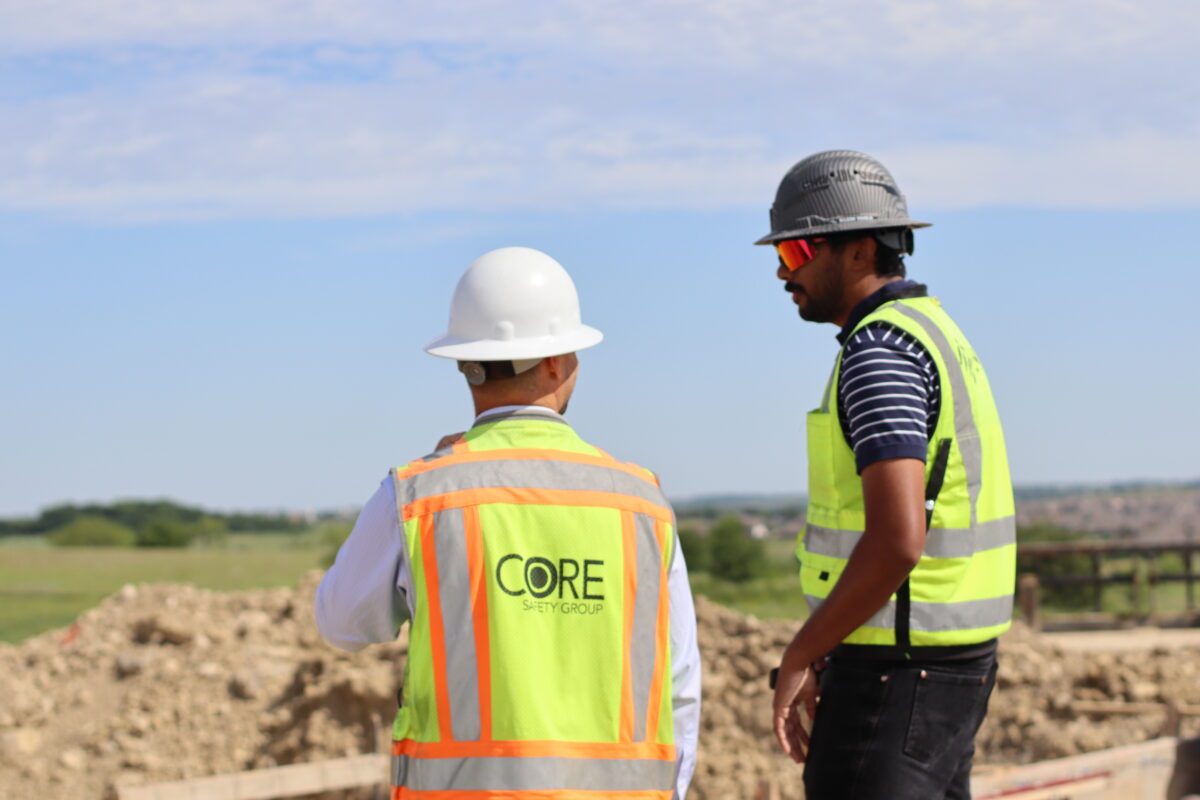
Every summer, construction crews, industrial teams, utility workers, roofers, equipment operators, and field employees face one of the most predictable workplace hazards: heat illness.
Across the country, workers are pouring concrete, climbing scaffolds, entering confined spaces, working around heavy equipment, and completing outdoor tasks in high heat and humidity. Heat illness is preventable, but prevention requires more than a water cooler, a poster, and a reminder to “take breaks when you need them.”
For many employers, the issue is not a complete lack of awareness. The issue is that heat illness prevention often fails in the field because the program is too general, too passive, or not consistently enforced when schedules get tight.
A strong heat illness prevention program should be practical, site-specific, and actively managed. That means supervisors understand the risk, workers know what to watch for, new and returning employees are gradually acclimatized, and the company has clear expectations for water, rest, shade, training, monitoring, and emergency response.
Below are the most common gaps CORE Safety Group sees in heat safety efforts, and what employers can do to close them.
Many jobsites have the basics: drinking water, a shaded area, electrolyte packets, and a safety poster listing the symptoms of heat exhaustion or heat stroke. Those are important tools, but they are not a complete heat illness prevention program.
A real heat safety program should identify who is responsible for monitoring heat conditions, when additional controls are triggered, how breaks are managed, how workers are trained, and what happens when someone begins showing signs of heat-related illness.
Water and shade only work when they are part of a broader safety management system. Without defined responsibilities, work-rest expectations, acclimatization procedures, and supervisor accountability, heat safety becomes a checkbox instead of an active field practice.
Employers should consider whether their heat illness prevention plan answers these questions:
· Who monitors the heat index or other environmental conditions throughout the day?
· When are water, rest, and shade expectations increased?
· How are new and returning workers acclimatized?
· Who has authority to stop or adjust work when heat risk increases?
· How are supervisors trained to recognize early signs of heat stress?
· How is compliance documented during active field operations?
If those answers are unclear, the program likely needs to be strengthened.
One of the most overlooked heat safety issues is acclimatization. Workers who are new to outdoor work, returning from time away, or moving into hotter conditions need time to build heat tolerance.
OSHA advises employers to train new workers on heat stress, symptoms, rest, water, and the importance of close monitoring. OSHA also recommends using a buddy system and not allowing new workers to work alone when heat risk is present.
NIOSH recommends gradually increasing exposure for new and returning workers over a 7- to 14-day period, with new workers generally needing more time to acclimatize than experienced workers who recently had heat exposure.
This matters because a worker may be experienced in construction or industrial work but still not be acclimatized to current heat conditions. A person returning from vacation, illness, a slow work period, or a cooler climate may not be ready for a full day of high-heat exposure on day one.
A stronger program builds in a ramp-up period rather than assuming every worker has the same heat tolerance.
Heat illness does not always begin with a dramatic collapse. Early signs may look like fatigue, irritability, confusion, reduced coordination, dizziness, headache, heavy sweating, weakness, or a worker simply acting “off.”
That makes supervisor and crew-lead training critical.
A worker who slows down, becomes disoriented, or stops communicating clearly may need immediate attention. If a supervisor does not recognize those early indicators, the opportunity for early intervention can be missed.
Heat illness prevention training should go beyond emergency response. It should teach supervisors and field leaders how to recognize subtle symptoms, remove a worker from exposure, initiate first aid, escalate concerns, and make sure an affected worker is not left alone.
NIOSH recommends that employers train both workers and supervisors on recognizing signs and symptoms of heat-related illness, first aid, causes of heat illness, and steps to reduce risk.
This is one of the hardest issues for employers to admit.
When a project is behind schedule, heat safety can become inconsistent. Crews may push through the hottest part of the day, supervisors may shorten breaks, or workers may avoid speaking up because they do not want to slow production.
That is where written policies and field reality often separate.
A heat illness prevention plan only works if it is treated as a real safety requirement, not a suggestion. Work-rest schedules, shade breaks, hydration expectations, acclimatization procedures, and emergency response protocols must remain in place even when the project is under pressure.
Heat safety should be managed with the same seriousness as fall protection, confined space entry, lockout/tagout, excavation safety, or equipment operation. If the program disappears when the schedule gets tight, it is not a reliable program.
Not every jobsite has the same heat exposure. A roofing crew, concrete crew, warehouse team, utility contractor, manufacturing facility, data center construction project, and industrial maintenance crew may all need different controls.
A stronger heat illness prevention plan considers:
· Outdoor temperature, humidity, direct sun, radiant heat, and air movement;
· Physical workload and task duration;
· Personal protective equipment and clothing;
· Access to shade, cooling areas, and water;
· New, temporary, and returning workers;
· Shift length and time of day;
· Emergency response access;
· Language barriers and training needs;
· Project schedule pressure; and
· State or local heat safety requirements where applicable.
The goal is not to create a paper policy that sits in a file. The goal is to create a field-ready plan that supervisors can actually implement.
A practical heat illness prevention program should include more than general awareness. It should provide clear direction before, during, and after high-heat work.
Key components often include:
· A written heat illness prevention plan tailored to the work environment;
· Defined triggers for water, rest, shade, and cooling measures;
· A documented acclimatization process for new and returning workers;
· Supervisor and crew training on early recognition and response;
· A buddy system for monitoring workers during high-heat conditions;
· Clear authority to pause or adjust work when heat risk increases;
· Emergency response procedures for suspected heat illness;
· Documentation of training, inspections, and corrective actions;
· Periodic audits to confirm the program is being followed in the field; and
· Ongoing review as jobsite conditions, locations, and work activities change.
The most effective heat safety programs are not complicated. They are clear, enforced, and built into daily operations.
CORE Safety Group provides safety consulting, safety staffing, OSHA training, inspections, audits, and ongoing safety support for construction and general industry clients nationwide. Whether an organization needs one-time support, part-time assistance, full-time project coverage, or a scalable safety management resource, CORE helps employers strengthen workplace safety programs with practical field experience.
For heat illness prevention, CORE can support employers through:
· Heat illness prevention program development;
· Site-specific safety planning for construction and industrial operations;
· Safety inspections and audits to identify heat safety gaps;
· Supervisor and crew training on heat illness recognition and response;
· On-site safety staffing during peak heat or high-risk work activities;
· Safe Assist® ongoing safety management support;
· OSHA compliance support and documentation review;
· Safety manual development and policy updates; and
· Corrective action planning when field practices are not matching written expectations.
CORE’s Safe Assist® Program is especially useful for organizations that need ongoing safety management support without the cost or complexity of hiring a full-time safety director at every location. Through Safe Assist®, CORE provides dedicated safety support, training, inspections, audits, and program guidance designed to help companies keep safety efforts consistent across multiple crews, facilities, or jobsites.
Heat illness is one of the few workplace hazards where the risk factors, warning signs, and prevention steps are well understood. The challenge is execution.
A water cooler alone is not a heat program. A poster alone is not training. A written plan alone is not enforcement.
The employers that manage heat risk best are the ones that make heat illness prevention specific, active, and accountable in the field. They train supervisors, acclimatize new and returning workers, monitor conditions, document expectations, and give crews the authority to act before a heat-related emergency occurs.
If your organization needs help developing, reviewing, or implementing a heat illness prevention program, CORE Safety Group can help. Our nationwide team supports contractors, industrial employers, and multi-site organizations with safety consulting, safety staffing, OSHA training, safety audits, Safe Assist® support, and practical field-based safety management solutions.
Contact CORE Safety Group to discuss a heat safety approach that fits your crews, your jobsites, and your operations.