
Ladders are one of the most commonly used tools on jobsites across all industries – construction, manufacturing, oil and gas, and more. However, they are one of the leading causes of workplace injury when used improperly. Falls from ladders can lead to serious injuries, time away from work, and costly incidents for workers and employers. According to the Center of Disease Control (CDC), over 20,000 workers are injured annually from improper ladder usage.
Whether you’re a construction worker, safety professional, or contractor, understanding how to properly use a ladder is critical for you and your teams’ safety. Even the smallest mistakes, such as placing it on top of an uneven surface, carrying items while climbing, or overreaching can result in dangerous situations. In recognition of National Ladder safety month, this post will provide five tips to prevent jobsite ladder injuries and why they are critical to maintaining a safe environment
Before climbing a ladder, always inspect the ladder itself and the area around it. Are there cracks/broken steps in the ladder? Is the ladder resting on top of an uneven surface? Is the ladder unsecured? If you’re answer is yes to any of those questions – do not attempt to climb.
Take a few moments to inspect the ladder and implement any necessary repairs. Damaged ladders and unsecured placement significantly increase the risk of slips and falls. Make sure the ladder is placed on firm, level ground and that all rungs, rails, and locks are in good condition. If the ladder is defective or unstable, remove it from service and report it so it can be repaired or replaced. A quick safety check before climbing can make a big difference in preventing jobsite accidents.
Proper ladder setup is essential for safe use. Always place ladders on firm, level ground to prevent shifting or slipping while in use. If the surface is uneven or soft, the ladder may become unstable and increase the risk of a fall.
For extension ladders, make sure the ladder is positioned at the correct angle and extends at least three feet above the landing surface when accessing a roof or elevated platform. Secure the ladder whenever possible to prevent movement and ensure the top and bottom are stable before climbing. A properly positioned ladder provides a safer and more reliable working surface.
Nearly 50% of ladder-related falls are due to workers carrying items while climbing. Holding items in your hands can make it difficult to maintain balance and grip the ladder, making it nearly impossible to maintain correct contact with the ladder.
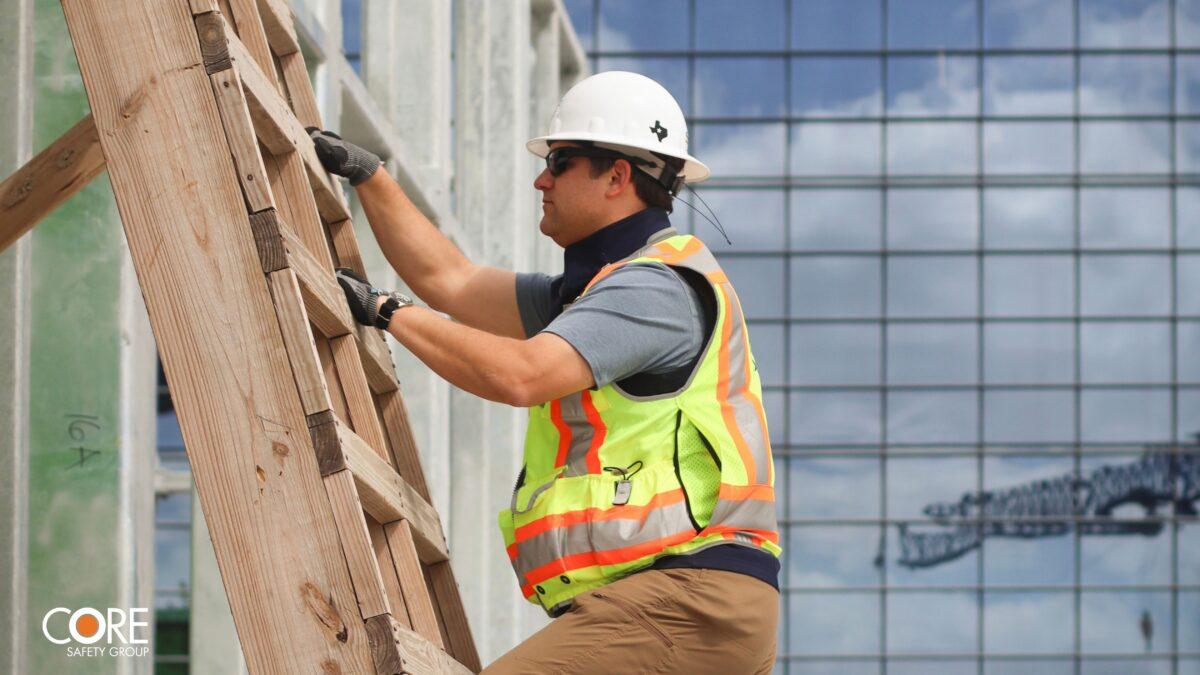
When climbing, workers should always maintain three points of contact – either two hands and one foot, or two feet and one hand at all times. This helps provide stability and allows you to react quickly if you lose your footing. Instead of climbing with tools or materials, use tool belts, pouches, or holsters to get these items up the ladder. For larger items, consider using a rope, hoist, or other lifting method to raise items once you’ve safely climbed to your destination.
When climbing a ladder, always face the rungs and pay close attention to where you place your hands and feet. Move slowly and deliberately, maintaining proper contact with the ladder as you climb. Staying focused and keeping steady footing helps reduce the risk of slips or sudden loss of balance.
If you are wearing a tool belt, be mindful that it does not catch on the ladder’s rungs or side rails while climbing. Keep your belt buckle centered between the ladder’s side rails to help maintain balance and proper positioning. Climbing carefully and staying centered on the ladder can significantly reduce the risk of slips, falls, and other jobsite accidents.
While working on a ladder, it’s important to keep your body centered between the ladder’s side rails at all times. Reaching too far to the side can shift your center of gravity and cause the ladder to become unstable. Overreaching is one of the most common causes of ladder-related falls.
If you cannot comfortably reach your work area, climb down and reposition the ladder instead of stretching or leaning. Taking a few extra moments to move the ladder can greatly reduce the risk of losing balance or tipping the ladder. Maintaining proper positioning while working helps ensure stability and keeps the ladder securely in place
Ladder safety is a critical part of preventing workplace injuries and maintaining a safe jobsite. Taking the time to inspect your ladder, maintain proper contact while climbing, and follow safe climbing techniques can significantly reduce the risk of falls. Simple precautions like proper ladder setup and avoiding overreaching can make a major difference in keeping workers safe. By following these ladder safety best practices, employers and workers can work together to create a safer work environment and prevent unnecessary accidents on the job.
Proper training is one of the most effective ways to prevent ladder-related accidents on the jobsite. At CORE Safety Group, we provide comprehensive safety training programs designed to help workers recognize hazards, follow best practices, and stay compliant with workplace safety standards. If your team is in need of professional safety training or support, contact us today to learn how we can help strengthen your safety program and keep your workforce protected. We’re here to protect your greatest assets: People.